
86% of employers expect AI and information-processing technologies to transform their business by 2030, while 58% expect robotics and automation to have a significant impact, according to the World Economic Forum — Future of Jobs Report 2025 For Microsoft-centric organizations, that transformation raises an important technology question: should recruiting continue operating as a standalone application, or should it become part of the broader business technology environment?
Recruiting already extends far beyond candidate tracking. Recruiters communicate through Outlook and Teams, hiring managers collaborate across departments, leaders expect data-driven reporting, and IT teams need recruiting applications to meet the same security and governance standards as the rest of the organization.
As AI, automation, and data become increasingly important to business operations, connecting recruiting to the technology ecosystem the organization already uses becomes more valuable.
Instead of asking only whether an ATS can manage candidates and jobs, Microsoft-centric organizations can ask a broader question:
How well does recruiting fit into the technology environment our business already uses?
Recruiting Touches More of the Business Than Ever
A recruiting process can involve recruiters, hiring managers, HR, operations, finance, department leaders, and executives.
Each stakeholder interacts with recruiting differently.
Recruiters need detailed pipeline visibility and candidate information. Hiring managers need an easy way to review candidates and provide feedback. Leadership wants to understand hiring performance and workforce needs. IT needs appropriate security, permissions, and governance.
When recruiting operates in a standalone environment, connecting all of these stakeholders often requires additional integrations, manual processes, or data exports.
A recruiting platform that operates within the broader Microsoft ecosystem can provide a different model: recruiting becomes another connected business process rather than an isolated application.
From Recruiting Data to Business Intelligence
Recruiting teams have traditionally tracked metrics such as time-to-fill, applicant volume, and source effectiveness.
Those metrics remain valuable, but organizations increasingly want to connect recruiting performance to broader operational questions.
Where are hiring bottlenecks occurring? Which teams are struggling to fill positions? Which recruiting activities produce the strongest results? How is hiring demand changing over time?
When recruiting data is connected to a broader reporting environment, organizations can move beyond basic ATS reporting toward more comprehensive business intelligence.
For Microsoft-centric companies, Power BI can play an important role in turning recruiting information into dashboards and operational insights that leadership can use alongside other business data.
Collaboration Should Happen Where Teams Already Work
One of the biggest sources of recruiting friction is not sourcing. It is coordination.
Recruiters wait for feedback. Hiring managers miss updates. Interview notes are scattered across conversations. Decisions get delayed because information lives in different places.
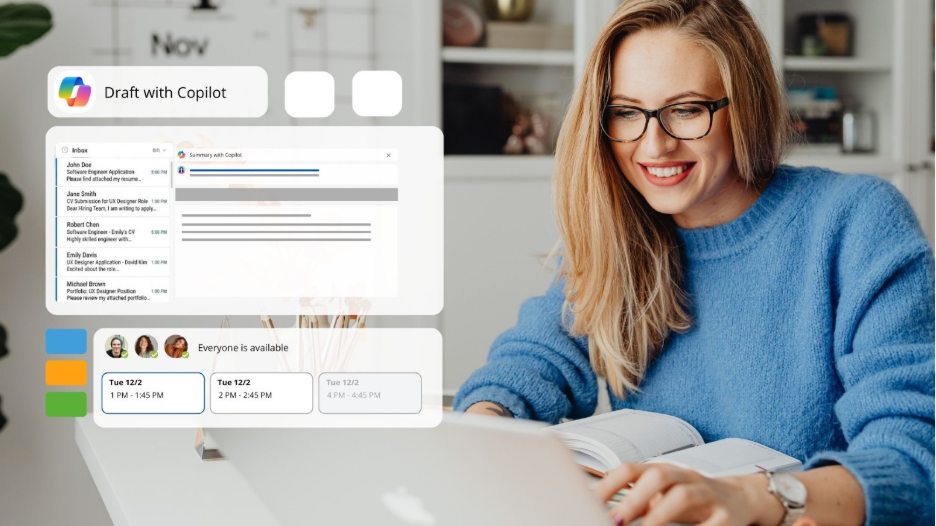
Microsoft-centric recruiting environments have an opportunity to reduce this friction by connecting recruiting workflows with tools employees already use, including Microsoft Teams and Outlook.
Instead of asking every stakeholder to adopt another isolated application, recruiting can become part of existing collaboration workflows.
Automation Connects the Process
Recruiting includes hundreds of small administrative actions: updating records, sending notifications, requesting feedback, assigning tasks, moving candidates through stages, and preparing reports.
Within the Microsoft ecosystem, Power Automate provides organizations with another layer of flexibility for building workflows across recruiting and other business processes.
The objective is not to automate recruiting decisions. It is to remove unnecessary administrative work surrounding those decisions.
AI Needs Context to Deliver Value
AI is quickly becoming a standard part of recruiting technology.
But generating a job description or summarizing a resume is only the beginning.
The larger opportunity is using AI within connected workflows where recruiting information, communication, and business context already exist.
The question is shifting from “Does the platform have AI?” to “Where does AI fit into our recruiting workflow, and what measurable work does it eliminate or improve?”
Security and Governance Cannot Be an Afterthought
Recruiting systems contain resumes, contact information, interview feedback, compensation discussions, and other sensitive information.
As a result, recruiting technology decisions increasingly involve IT and security teams.
Microsoft-centric organizations often already have established approaches to identity, access management, data governance, and application security.
Recruiting as Part of the Microsoft Business Platform
Dynamics ATS is built on Microsoft Dynamics 365 and Power Platform, allowing organizations to bring recruiting, CRM, automation, reporting, AI, and operations into a connected Microsoft environment.
Rather than adding another disconnected system to the technology stack, organizations can extend the Microsoft platform they already use to support recruiting.
A Different Way to Think About ATS Selection
For Microsoft-centric organizations, choosing recruiting technology is no longer simply about comparing ATS feature lists.
The larger questions are about architecture: How will recruiting data connect with the rest of the business? How will hiring managers collaborate? How will workflows be automated? How will reporting scale? How will AI be incorporated? How will security and governance be maintained?
When recruiting is treated as part of the broader business technology environment, the ATS becomes more than a candidate tracking system.
It becomes part of the organization’s operating infrastructure.
Dynamics ATS brings ATS, CRM, AI, automation, reporting, and recruiting operations together on the Microsoft platform. Schedule a demo to see what recruiting can look like when it works inside the ecosystem your organization already uses.